

“CPI and PPI take center stage this week, and the numbers could decide the Fed’s next move — even after Friday’s strong jobs report.”
August payrolls jumped 162,000, reversing July’s decline outright, while the unemployment rate held steady at 4.1%. Traders responded by pushing the odds of a September rate hike to roughly 59%, according to Fed funds futures — a meaningful climb from near-even odds before the report landed. But strong hiring only settles one side of the Fed’s mandate. The inflation side is still an open question, and this week is packed with the releases that will close it.
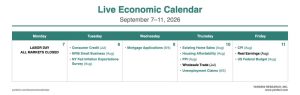
“Below is a breakdown of the five CPI and PPI-related releases I’m tracking most closely this week, in the order they’ll hit the tape.”
Wednesday: China Sets the Tone Overseas
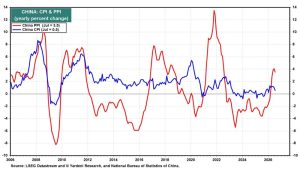
China kicks things off with its own CPI and PPI figures. In July, Chinese producer prices climbed 3.5% year-over-year — the fastest pace in years — largely on the back of a 16.4% surge in mining costs and a 6.1% rise in raw material prices. Consumer prices barely moved, up just 0.5%. It’s a textbook case of cost pressure building at the factory-gate level without yet reaching what ordinary consumers pay. Wednesday’s release will show whether that gap is finally narrowing.
Thursday: A Crowded Day, Starting With U.S. Producer Prices
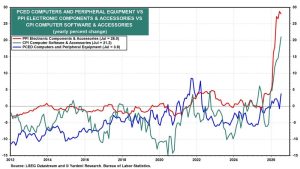
America’s August PPI print arrives Thursday, and one number inside it deserves more attention than headline readers usually give it: PPI for Electronic Components & Accessories has climbed 28.0% over the past year, dramatically outpacing the 21.2% rise in CPI for Computer Software & Accessories — the actual retail-facing measure. When wholesale costs run that far ahead of consumer prices, it typically means the pressure hasn’t finished working its way through the system yet, not that it’s disappeared.
Zoom out to the headline figure and the picture gets murkier. PPI Final Demand cooled to 4.7% year-over-year in July, down from June’s 5.5% — encouraging at first glance. But core PPI stayed pinned at that same 4.7%, and the measure excluding trade services actually ran hotter, at 5.2%. A softer headline number doesn’t always mean a softer underlying trend, and this is a clean example of that gap.
Thursday Also Brings the ECB’s Own Rate Call
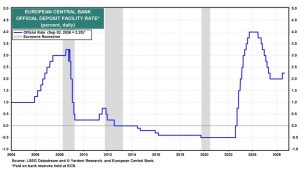
While the U.S. digests its PPI report, the European Central Bank will be announcing its own decision. Markets are pricing in near-certainty that the ECB lifts its deposit rate from 2.25% to 2.50%. The real story, though, is what Christine Lagarde signals about October — where markets currently assign just a 31.5% probability to a follow-up move. A synchronized round of global tightening tends to make it politically and economically easier for the Fed to act too, assuming domestic data lines up.
Also Worth Noting: Claims Data Isn’t Telling a New Story
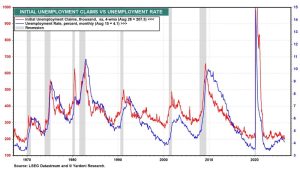
Initial jobless claims landed at 206,000 for the week ending August 28, with the four-week average sitting at 207,300. There’s no surprise buried in either figure — both track closely with what Friday’s jobs report already implied: a labor market holding firm, with no visible uptick in layoffs. The significance here isn’t in what the claims data reveals, but in what it fails to contradict, which leaves inflation as the remaining wildcard for September.
Friday: The Number That Actually Settles the Debate
The Cleveland Fed’s Inflation Nowcasting model — built from real-time price data ahead of the official BLS release — currently estimates August headline CPI at 3.38% year-over-year and 0.36% on the month, nearly identical to July’s 3.4% pace. Core CPI is projected at 2.38% annually and 0.20% monthly, a slight step down from July’s 2.5%.
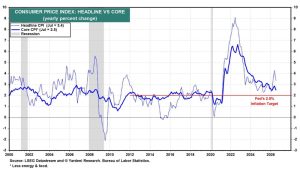
If Friday’s actual print lands close to those estimates, the inflation conversation stays roughly where it’s been, and the Fed’s decision leans more heavily on the labor data it already has. A hotter-than-expected number would likely be enough to secure majority support for a hike at the September 15-16 meeting. A cooler one could just as easily erase much of the rate repricing that followed last week’s jobs report.
Putting It Together
None of these five releases decides anything by itself. What they do collectively is test whether the labor-market strength from last week’s NFP report is matched by genuine progress on inflation — or whether that progress is still more promise than reality. The jobs report told the Fed what it wanted to hear on growth. This week tells it whether it’s hearing the same good news on prices, and that answer is likely to carry more weight heading into September 15-16 than anything in last Friday’s headline.
Farzad Vajihi
Financial Markets Analyst | farzadvajihi.com